English
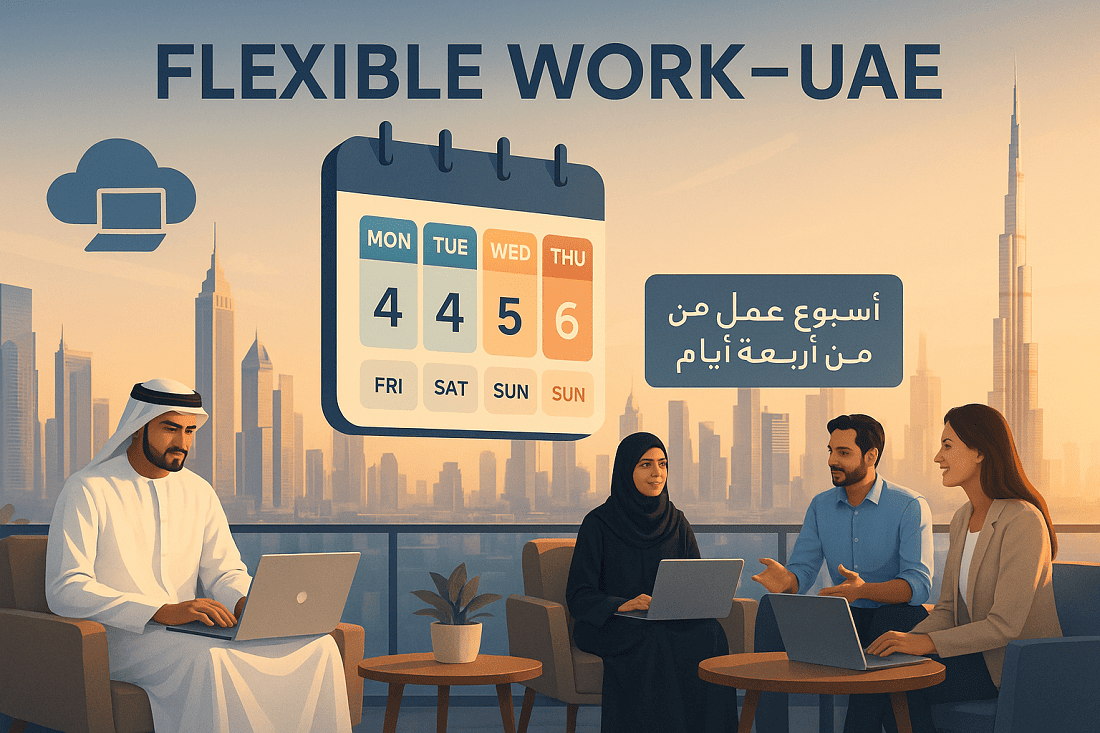
The UAE’s workplace is undergoing a transformative shift in 2025, with flexible work arrangements and the four-day workweek gaining momentum. As the Emirates continues to position itself as a global hub for innovation and talent, businesses are embracing modern work models to boost productivity, enhance employee well-being, and attract top talent. A recent Ipsos survey revealed that 74% of UAE respondents expect businesses to offer greater workplace flexibility in 2025, signaling a cultural shift toward work-life balance. This blog explores how flexible work and the four-day workweek are reshaping the UAE’s professional landscape, their benefits, challenges, and what lies ahead.
Flexible work—encompassing remote work, hybrid models, and adjustable hours—has become a cornerstone of the UAE’s modern workplace. Driven by advancements in digital collaboration tools and a growing emphasis on employee satisfaction, businesses across Dubai, Abu Dhabi, and beyond are adapting. The UAE’s tech-forward infrastructure, including 5G networks and cloud-based platforms, supports seamless remote and hybrid work, enabling employees to collaborate from anywhere.
Employee Expectations: The Ipsos survey highlights that 74% of UAE workers prioritize flexibility, with 88% expecting better physical health and 87% anticipating improved mental well-being in 2025.
Government Support: The UAE’s Vision 2021 emphasizes quality of life, encouraging businesses to adopt employee-centric policies. Initiatives like Dubai’s Smart Workplace program promote digital tools for flexible operations.
Global Influence: The UAE’s diverse workforce, with over 200 nationalities, brings global perspectives, aligning local practices with international trends like hybrid work.
The four-day workweek, where employees work fewer days without a reduction in pay, is gaining traction in the UAE. Following successful global trials, such as those in the UK and Japan, UAE companies are piloting this model to enhance productivity and employee satisfaction. In 2022, the UAE government implemented a 4.5-day workweek for public sector employees, setting a precedent for private sector adoption.
Sharjah Government: Since 2022, Sharjah’s public sector has operated on a four-day workweek, reporting a 90% increase in employee happiness and a 70% boost in productivity.
Private Sector Pioneers: Companies like Emirates NBD and Majid Al Futtaim are experimenting with four-day workweek pilots in 2025, focusing on compressed hours (e.g., 10-hour days over four days) to maintain output.
Startups: Tech startups in Dubai Silicon Oasis are adopting flexible schedules, leveraging AI-driven tools to streamline workflows and reduce work hours.
Increased Productivity: Studies show employees on a four-day workweek are 20–30% more productive due to focused work and reduced burnout.
Employee Well-Being: Shorter workweeks improve mental health, with 87% of UAE workers expecting better work-life balance in 2025.
Talent Attraction: Flexible policies make the UAE more attractive to global talent, supporting initiatives like the Golden Visa program.
Cost Savings: Businesses report reduced operational costs, such as lower utility expenses, in hybrid and four-day models.
While the benefits are clear, implementing flexible work and four-day workweeks comes with challenges:
Operational Adjustments: Industries like retail and hospitality, which rely on fixed schedules, face difficulties adapting to shorter workweeks.
Cultural Shifts: Traditional workplace mindsets may resist change, requiring strong leadership to drive adoption.
Equity Concerns: Ensuring fairness in flexible arrangements across diverse roles (e.g., office vs. frontline workers) is critical.
Technology Dependence: Reliable digital infrastructure is essential, and smaller businesses may struggle with the costs of advanced tools.
The UAE is addressing these challenges through government-backed training programs and incentives for SMEs to adopt digital solutions, ensuring equitable access to flexible work models.
Advanced technologies are powering the UAE’s flexible work revolution. Tools like Microsoft Teams, Zoom, and Slack facilitate seamless collaboration, while AI-driven platforms like Asana and Trello optimize task management. The UAE’s 5G network, covering 98% of urban areas in 2025, ensures high-speed connectivity for remote workers. Additionally, cybersecurity solutions like Zscaler and CrowdStrike protect sensitive data, addressing concerns about remote work security.
Looking ahead, the UAE is poised to lead in flexible work adoption. In 2025, expect:
Wider Four-Day Workweek Trials: More private sector companies, especially in tech and finance, will pilot four-day workweeks, following Sharjah’s success.
Hybrid Work Standardization: Hybrid models will become the norm, with 80% of UAE businesses offering mixed office-remote schedules.
AI-Driven Productivity: AI tools will automate repetitive tasks, enabling shorter workweeks without compromising output.
Employee-Centric Policies: Companies will prioritize mental health programs and flexible hours to retain talent in a competitive market.
The UAE’s alignment with global trends, coupled with its innovative infrastructure, positions it as a model for the future of work. Posts on X highlight growing excitement for flexible work, with employees praising companies that prioritize well-being.
Flexible work and the four-day workweek are transforming the UAE’s workplace, aligning with the nation’s vision for innovation and quality of life. By embracing these models, businesses are boosting productivity, attracting talent, and fostering happier, healthier workforces. As the UAE continues to lead in workplace innovation, 2025 marks a pivotal moment for redefining how we work in the Emirates.