English
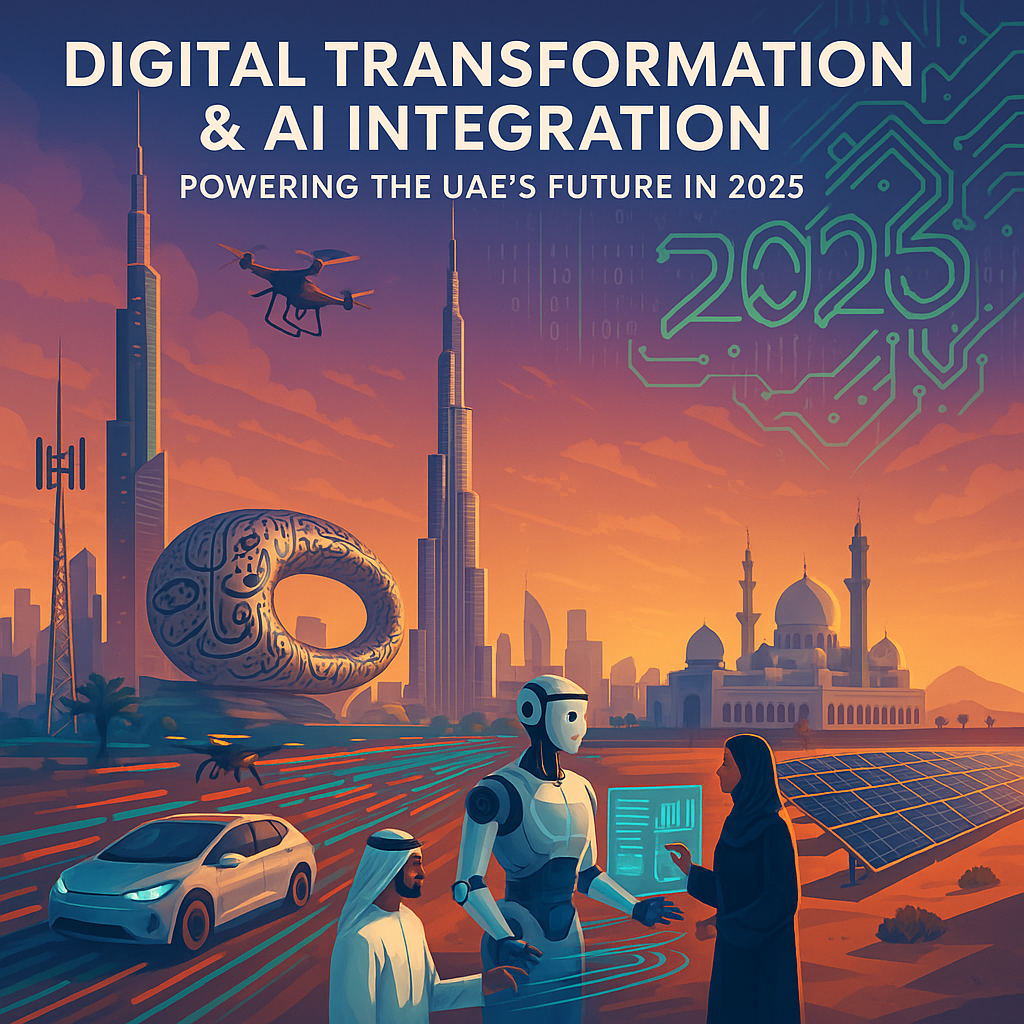
The UAE is at the forefront of a technological revolution, with digital transformation and artificial intelligence (AI) reshaping industries and redefining innovation. As a global hub for technology, the Emirates is leveraging AI to drive efficiency, enhance customer experiences, and align with its ambitious National Artificial Intelligence Strategy 2031. From Dubai’s smart cities to Abu Dhabi’s financial innovations, the UAE’s embrace of AI is setting a benchmark for the world in 2025. This blog explores how digital transformation and AI integration are transforming key sectors, fueling economic growth, and shaping the future of the UAE.
The UAE’s leadership has made digital transformation a cornerstone of its economic and social progress. The National Artificial Intelligence Strategy 2031 aims to position the UAE as a global leader in AI by fostering innovation, attracting talent, and integrating smart technologies across sectors. Initiatives like the Dubai Future Foundation and DIFC Innovation Hub are nurturing AI-driven startups, while government-backed programs ensure widespread adoption of digital tools. In 2025, the UAE is seeing unprecedented investment in AI, with businesses and public institutions prioritizing automation, data analytics, and machine learning to stay competitive.
The UAE’s AI market is projected to contribute $320 billion to the Middle East’s economy by 2030, with the UAE leading the charge (source: PwC Middle East).
Over 70% of UAE businesses have adopted AI-powered solutions in 2025, particularly in healthcare, finance, and retail (source: industry reports).
AI is revolutionizing healthcare in the UAE, enabling faster diagnostics, personalized treatments, and improved patient outcomes. In 2025, hospitals in Dubai and Abu Dhabi are using AI-driven tools like predictive analytics to identify health risks and optimize resource allocation. For example, Cleveland Clinic Abu Dhabi employs AI to enhance imaging accuracy, while telemedicine platforms powered by AI chatbots provide 24/7 patient support. These advancements align with the UAE’s goal of becoming a global healthcare destination.
The financial sector is undergoing a digital overhaul, with AI at its core. The Dubai International Financial Centre (DIFC) is a hub for fintech innovation, where AI-powered solutions like fraud detection, robo-advisors, and algorithmic trading are transforming banking. Emirates NBD, one of the UAE’s leading banks, has integrated AI to offer personalized financial advice, boosting customer satisfaction. Blockchain and AI convergence is also streamlining cross-border transactions, making the UAE a leader in fintech adoption.
AI is reshaping the UAE’s retail landscape by delivering hyper-personalized shopping experiences. In 2025, platforms like Noon and Amazon.ae use AI algorithms to analyze consumer behavior, recommend products, and optimize supply chains. Chatbots and virtual assistants enhance customer service, while AR-powered virtual try-ons are gaining traction in fashion retail. The rise of social commerce, driven by AI insights, is also boosting sales on platforms like Instagram and TikTok.
Dubai’s vision to be the world’s smartest city is powered by AI and IoT integration. The Smart Dubai Initiative uses AI to manage traffic flow, reduce energy consumption, and enhance public safety. For instance, AI-powered surveillance systems in Dubai monitor real-time data to ensure urban security, while smart grids optimize energy distribution. Abu Dhabi’s Masdar City leverages AI to advance sustainable urban planning, aligning with the UAE’s green goals.
The UAE’s startup ecosystem is thriving, thanks to AI-focused accelerators and free zones like Dubai Silicon Oasis and Abu Dhabi Global Market (ADGM). These hubs offer low-cost business setups, tax incentives, and access to global talent, fostering AI innovation. Startups like Sarwa (fintech) and Derq (smart mobility) are using AI to address local and global challenges, attracting significant venture capital in 2025. The Dubai Future Accelerators program continues to connect startups with government entities, driving real-world AI applications.
While the UAE’s AI journey is impressive, challenges remain. Data privacy concerns, the need for skilled AI talent, and ethical considerations around automation are critical issues. However, the UAE is addressing these through robust regulations, such as the UAE Data Protection Law, and investments in education, like the Mohamed bin Zayed University of Artificial Intelligence. Opportunities abound, particularly in scaling AI for small and medium enterprises (SMEs) and integrating it into emerging sectors like the metaverse and space technology.
Looking ahead, the UAE is poised to lead in AI-driven innovation. In 2025, expect advancements in generative AI, with tools like GPT-5 powering creative industries and customer service. The UAE’s ambition to pioneer the metaverse will see AI enabling immersive experiences in real estate, gaming, and tourism. Additionally, collaborations with global tech giants like Google and Microsoft will accelerate AI adoption, positioning the UAE as a global model for digital transformation.
Digital transformation and AI integration are propelling the UAE into a new era of innovation and growth. By leveraging AI across healthcare, finance, retail, and smart cities, the Emirates is not only enhancing efficiency but also improving quality of life for its residents. As the UAE continues to invest in AI talent, infrastructure, and policies, it is setting a global standard for what a tech-driven future can achieve. Stay tuned to this space as the UAE continues to shape the world of tomorrow.